Commentary: Did the world just get a second Belt and Road Initiative?
HONG KONG: There has been much hype effectually the announcement past the G7 of the Build Back Better Globe (B3W) initiative every bit a counter measure to Prc'south Belt and Road Initiative (BRI).
But a nuanced understanding of the B3W reveals a more circuitous set of objectives depending on who you enquire.
For 1, the B3W is not new.
While hailed as a new initiative under the Joe Biden administration, the idea of an alternative infrastructure programme to Mainland china's was initiated under President Donald Trump 'south administration nether the catenary of the bipartisan Better Utilisation of Investments to Development (BUILD) Human activity passed by the House and Senate and signed into police force by Trump in 2018.
READ: Commentary: G7 acme proved the world has shifted after Trump
READ: Commentary: We need to talk about how Donald Trump's presidency wasn't a complete disaster
BUILDING ON THE BUILD ACT
Central to the BUILD program was less the objective of countering Cathay and more than the aim to encourage private sector investment into developing countries that would reduce the need for US foreign aid.
The focus was on funding hard infrastructure, such as electricity, that would help less adult countries attract investment to abound their way out of poverty.
The BUILD Deed also had the mandate to invest upwards to US$60 billion in individual sector investment to fight extreme poverty.
The United states of america would do this by converting the US Overseas Private Investment Corporation (OPIC) into a new international Development Finance Corporation (USIDFC) with modernised financing capabilities, including the ability to provide equity financing, local currency loans and guarantees.

This new USIDFC, established under the BUILD Human action, would make loans, invest in and forge partnerships with those wanting to do business in low- to middle-income countries as a minority investor.
MOUDLING INTERNATIONAL INFRASTRUCTURE FINANCING
It was only in 2022 that the USIDFC gained international muscle through the mooting of a Blueish Dot Network (BDN) in which the US joined forces with Nippon and Australia but remained open to other countries joining the network in supporting loftier-quality, private sector led investments.
Framed in terms of countering Chinese influence under an Indo-Pacific strategy, the BDN would indeed offering an culling to China'south BRI and tap into the United states$1.3 trillion dollars in trade volume betwixt China and the countries forth the BRI in 2018.
It would fill the demand for international infrastructure financing with a The states model through mobilising private capital while giving governments pare in the game in mitigating endemic risks including political, legal and social risks.
Only it was clear the iii countries couldn't do it on their ain. Enter the B3W.
The B3W is an extension of the BDN. At a high level, the B3W and BDN appear to be guided by similar policy and main guidelines in meeting the development needs of the poorer countries subscribing to agreed standards like the G20 Principles for Quality Infrastructure Investment endorsed in Osaka in 2019.
By mobilising private sector uppercase, the B3W's funding is aimed at addressing iv specific areas (i.e., climate, health, digital engineering science, and gender equity), enlisting an "brotherhood of democracies" to project soft power driven by mutual values, good governance and established standards.
READ: Commentary: The US needs a new Mainland china strategy
READ: Commentary: Joe Biden's quietly revolutionary offset 100 days
Indeed, the B3W announcement has been positioned as a "democratic" alternative to the BRI and a foreign policy move by the Usa to showcase President Biden's foreign relations credentials, signal that the U.s.a. is back and shore up the U.s.a.'s influence in transatlantic relations, after a dismal 4 years nether Trump.
But even amid all that puffery, United states of america allies are wary of isolating Prc, with United kingdom Prime Minister Boris Johnson at the G7 expressing a desire to frame this as a "green BRI" granting access to financing for depression-carbon projects like clean free energy that "shows who we are, not who we are against".

While planning to offer a U.s.a.$100 billion a year in alterative loans, the G7 has collectively signalled it is more than keen on a path forward less seen as a challenge of China and more a framework in which G7 nations tin yet engage with China.
Even within the United states of america, some politicians rather call this the "Green Marshall Plan", to avert demonising the BRI.
THE DRAWBACKS OF THE B3W
Perhaps the improve question is whether the B3W tin credibly rival the BRI. The reply is less certain. The B3W later on all is playing catch-up. Being a nascent idea, the B3W naturally lacks a articulate pathway frontward that helps developing countries admission global merchandise and build their corresponding economies.
In comparison, the viii-year-quondam BRI has an integrated, regional infrastructure development plan based on supply concatenation considerations connecting markets via integrated port-rail-route send networks.
READ: Commentary: Just how much practise Cathay's Chugalug and Road projects benefit recipient countries?
READ: Commentary: We sure believe some weird stuff about People's republic of china's Belt and Road Initiative
Not simply has the BRI created employment in local markets in the structure stage, it has likewise facilitated commercial sustainability by enhancing access to export markets.
Another advantage that the BRI has is the Digital Silk Road that overlays the BRI, digitally connecting even the nigh remote of markets, with BRI countries obliged to apply the digital network and standards of Mainland china when doing trade. But the B3W does not impose this level of integration.
The challenge also is how the B3W will treat projects with meaning carbon footprints commonplace in developing countries.
Under the B3W investment criteria, there would exist no funding given to coal-fired power stations but developing countries might have few credible energy alternatives. Meanwhile, nether People's republic of china's BRI dark-green investment guidelines, funding would be given to loftier-efficiency low-emissions coal power stations.
READ: Commentary: Communist china'south foreign loans, as a recent written report shows, is full of 'Chinese characteristics'
It also remains unclear whether the B3W private sector funding model, funded by patient capital including pension funds, insurance companies and other private investors, will be able to catalyse development on the scale of the BRI, which uses Red china'southward vast foreign exchange reserves and financing from country banks to dorsum projects.
For now, it is difficult to run across how the B3W tin rival the cooperation agreements with 140 countries and 31 international organisations enjoyed past Prc'due south BRI.
TIMING IS EVERYTHING
Then again, COVID-nineteen has exposed a number of shortcomings of the BRI, specially with 20 per cent of BRI projects being put on concur.
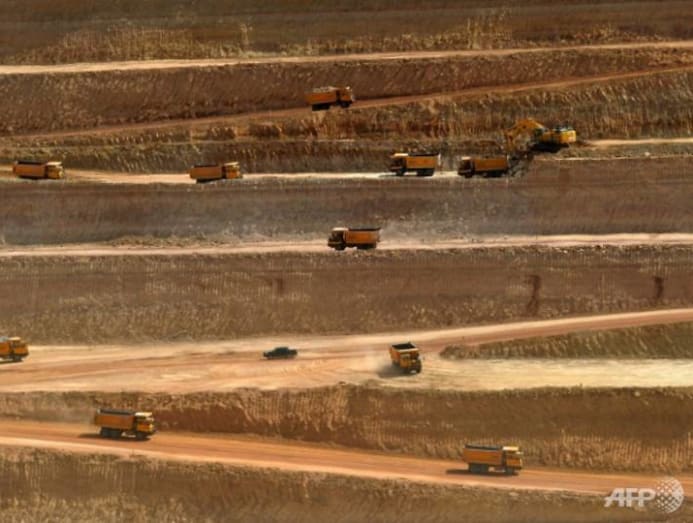
These project delays accept highlighted the fundamental problem afflicting many BRI projects of a lack of upfront due diligence with the result being that many BRI projects have frequently simply traded speed early on in the project cycle for far more hard bug after.
Tied financing that favour the use of Chinese contractors and opaque practices accept also been associated with toll blow-outs and corruption scandals, virtually infamously in the case of the Eastward Coast Rail Link projection in Malaysia.
And with several countries now challenging China's claims that BRI had been congenital on mutual respect, potent people-to-people bonds and non-interference in national sovereignty, there is a window of opportunity for the B3W to brand itself more relevant.
Andre Wheeler is main executive of Asia Pacific Connex and has twenty years of international business organisation experience in the United states and Asia-Pacific.
Source: https://cnalifestyle.channelnewsasia.com/commentary/commentary-did-world-just-get-second-belt-and-road-initiative-275821
0 Response to "Commentary: Did the world just get a second Belt and Road Initiative?"
Post a Comment